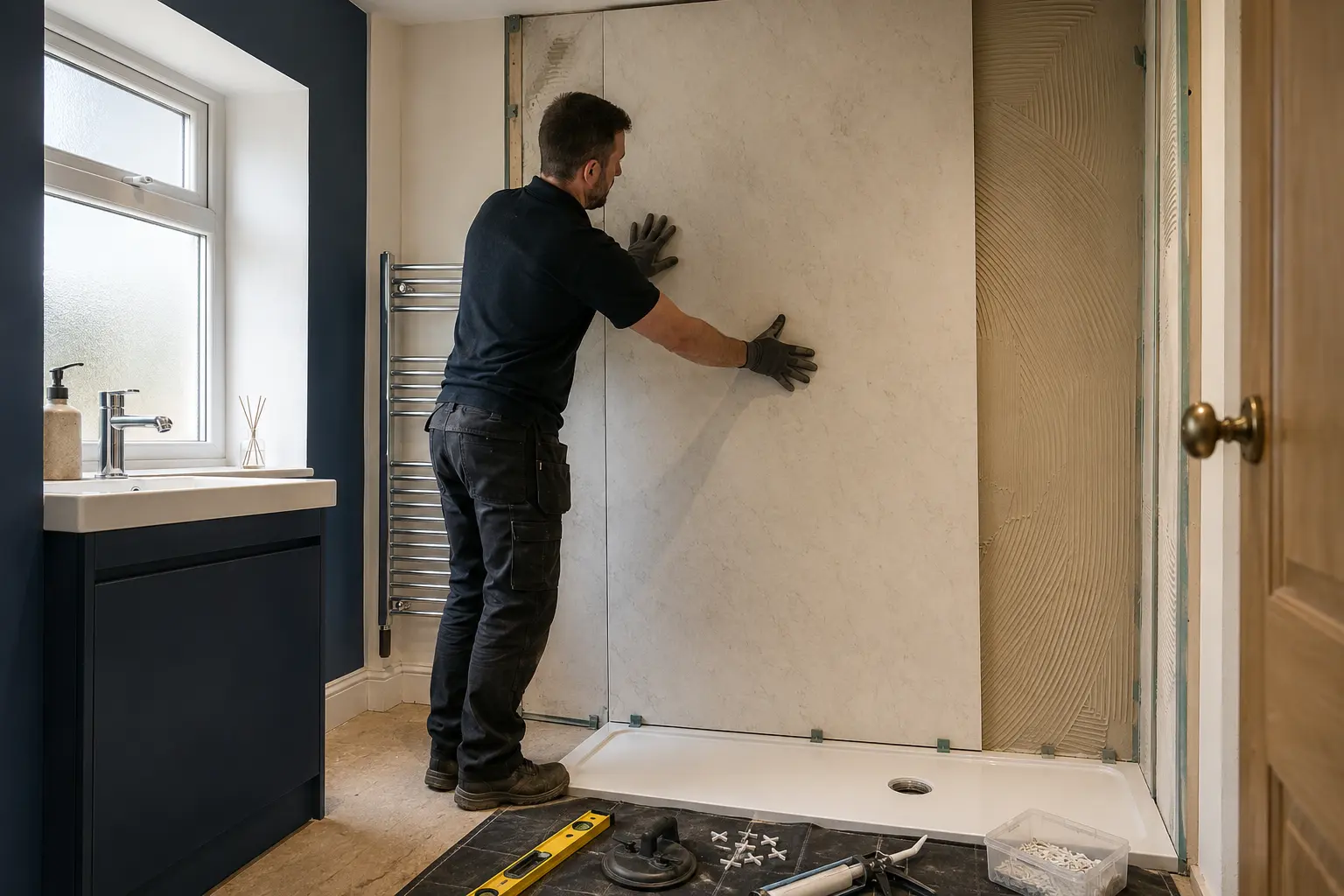
Compare the finished look in your own room
Tiles offer a wide choice of sizes, colours and patterns, with grout lines forming part of the finished appearance. Wall panels cover larger areas with fewer joints, depending on the system and room. Either can suit a modern or traditional bathroom. Start with the effect you want, but look at samples beside your actual floor, furniture and lighting before making the final choice.
A small sample cannot show every repeat in a printed pattern or the full effect of a large tiled wall. Ask how the material will be arranged around corners, windows, niches and fittings. The position of cuts, joints and trims can make a noticeable difference. Reviewing those details on a measured plan is more useful than choosing a finish from a photograph that shows none of the room's awkward edges.
Understand what happens behind the surface
Neither tiles nor panels remove the need to assess the existing wall. Loose material, damp, damage or an unsuitable base must be dealt with as part of the installation. Ask what preparation is included and whether the proposed system can be fitted over the existing surface. That depends on its condition and the product instructions, not simply on whether covering it would be quicker.
Wet areas need an appropriate complete installation, including the required waterproofing and treatment of joints and openings. Tiles and grout alone should not be treated as a guarantee that water cannot reach the structure behind them. The installer should explain the proposed system in plain terms. Keep the preparation and waterproofing details in the quote so you can compare the actual work behind two similar-looking finished walls.
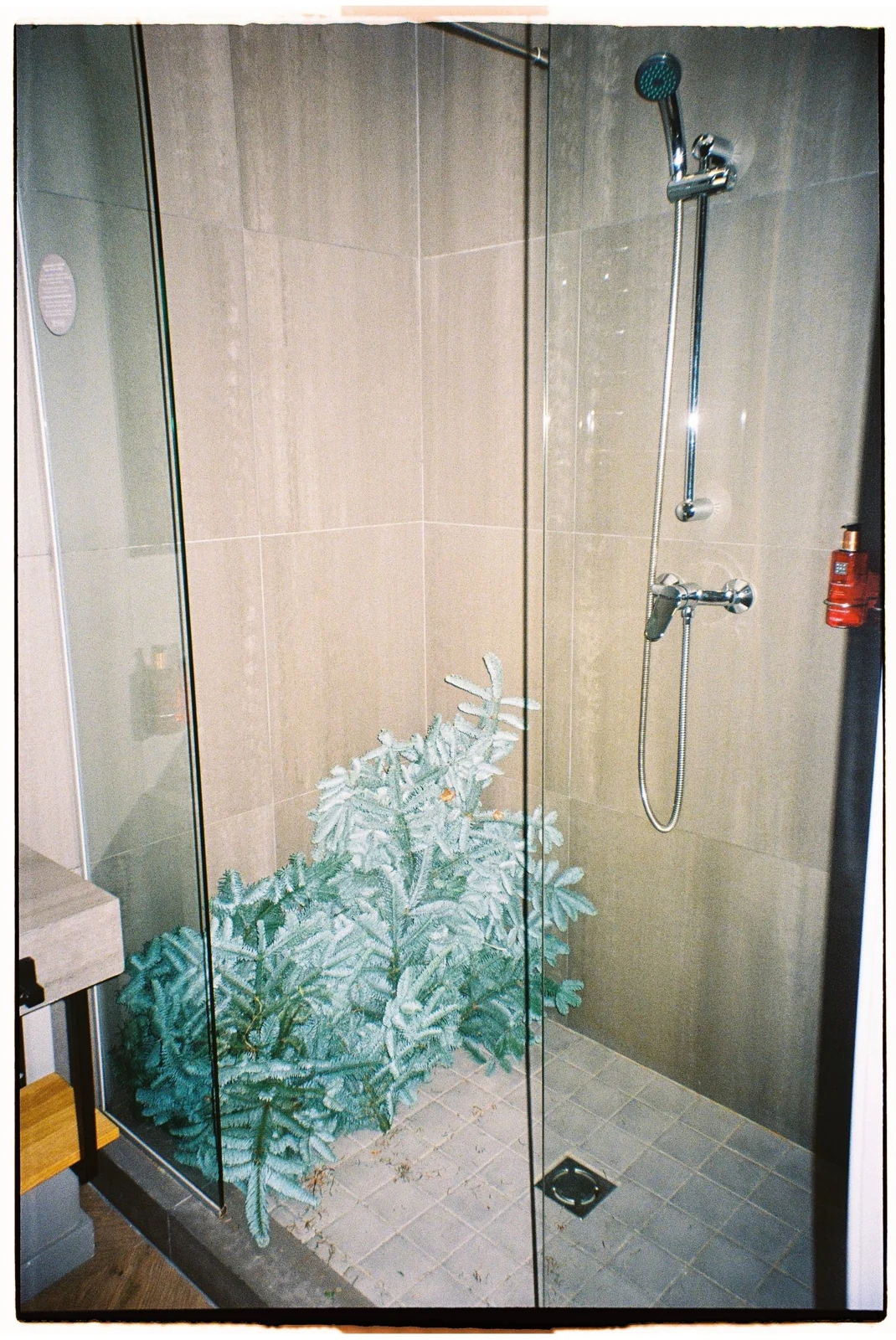
Look at joints, corners and cleaning
Panels can reduce the number of joints compared with many tiled arrangements, but they still have edges, connections and fittings to maintain. Check the manufacturer's cleaning instructions and any requirements for seals or trims. Fewer joints may make some cleaning tasks simpler, but it does not make the bathroom maintenance-free. Soap, deposits and moisture still need routine attention on the chosen surfaces.
For tiles, consider the grout colour and joint arrangement as well as the tile face. A highly textured finish or intricate pattern may take more care to clean than a smoother, simpler surface. Cleaning products must suit the material, grout and any protective coating. Natural stone needs particular attention to its own care instructions. Avoid applying a general limescale cleaner to every surface without checking that it is suitable.
Plan around windows, storage and plumbing
The wall around a window, recessed shelf or concealed shower control introduces details that need careful planning. Ask how the selected material will finish around each opening and how water will be managed. A niche should be useful for the bottles you keep, not just attractive in a picture. Its position must also suit the wall construction and the complete wet-area system.
Allow for the thickness of the finished wall when reviewing furniture, shower screens and pipe connections. A change of material can affect how nearby fittings align or how much adjustment a screen needs. Check those relationships before ordering. Keep access to serviceable plumbing parts as required, and ask how an access panel will be finished so it remains usable after the surrounding walls and furniture are complete.
Compare repairs and future changes
Ask what a repair would involve if a tile, panel or joint is damaged later. The answer depends on the particular product and installation. Keeping a sensible quantity of matching spare material may help, but confirm storage and product details rather than assuming that a similar finish will always remain available. Record the manufacturer, range and colour with the bathroom paperwork for future reference.
Consider likely changes too. Moving a rail, mirror or cabinet can leave holes that need dealing with appropriately. A panel is not always simpler to repair just because it is larger, and a tile is not always easy to replace without affecting its neighbours or the waterproofing. Discuss practical repair options with the installer before choosing a system, especially where the wall contains several fittings or concealed parts.
Compare the complete fitted price
A fair quote includes the material, removal where needed, wall preparation, waterproofing, trims, joints, labour and finishing around openings. Compare that complete work rather than the price of one tile box against one panel. Ask which tasks are included and how any hidden damage will be priced and approved. Confirm delivery and product checks before work begins so missing trims or matching components do not delay the installation.
Choose the option that suits your preferred look, cleaning routine, room details and budget. Tiles may be right where their size or pattern is central to the design. Panels may suit a simpler large-surface finish with fewer joints. Neither is automatically the better choice for every bathroom. A clear measured proposal should show what you will see, what happens underneath and how to care for the finished walls.
To see the work this involves, read about our bathroom wall panels in hamilton. You can also read choosing bathroom flooring and choosing tap and shower finishes.