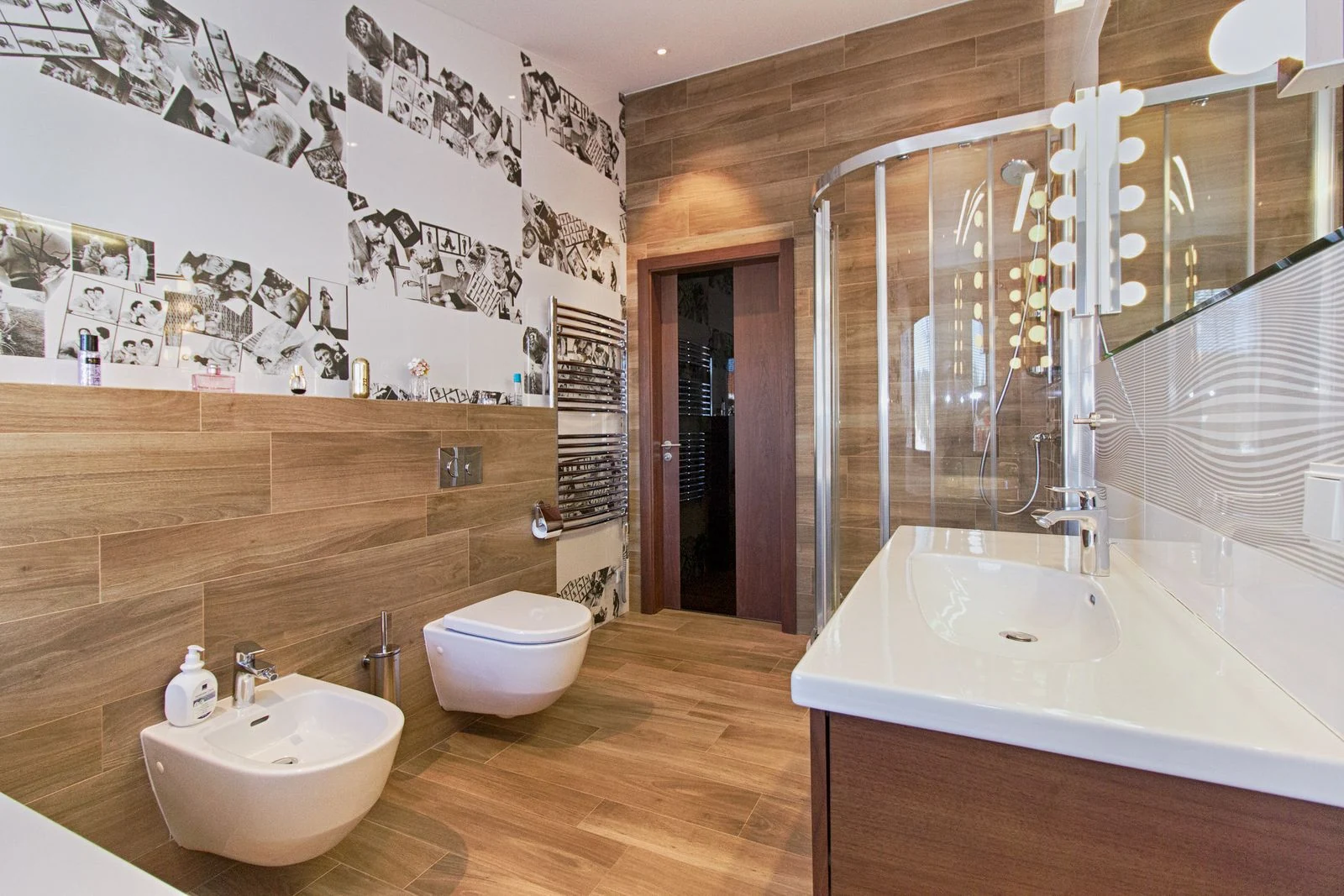
Choose one clear starting point
Begin with the feature you most want in the room. It might be a traditional-looking vanity, simple modern shower, patterned floor or existing window detail. Use that choice to guide the others rather than collecting unrelated ideas from several photographs. A bathroom can include different styles, but it is easier to judge the result when one or two features provide a clear starting point.
Write down why you like each idea. You may be drawn to a colour, useful storage or a warm metal finish rather than the entire room shown in a picture. Separating those qualities helps you adapt an idea to your own bathroom. A large freestanding bath in a photograph, for example, is not necessary if what you really like is the combination of pale walls and traditional taps.
Get the layout right before the decorative details
Mark the door, window, plumbing positions and available space on a measured drawing. Include the movement of drawers, cupboard doors and shower screens. A traditional cabinet can be deeper than expected, while a modern open shower may need more splash protection than a small room allows. Compare the fittings in use, not just their outside dimensions when everything is closed and the bathroom is empty.
Keep the household's main needs in view. If storage is the problem, make sure the preferred vanity holds what you need without narrowing the walking space. If stepping over the bath is difficult, assess the shower entrance before focusing on its finish. Style should help shape a useful room, rather than forcing a practical compromise that becomes frustrating every morning after the initial excitement of the new bathroom has passed.
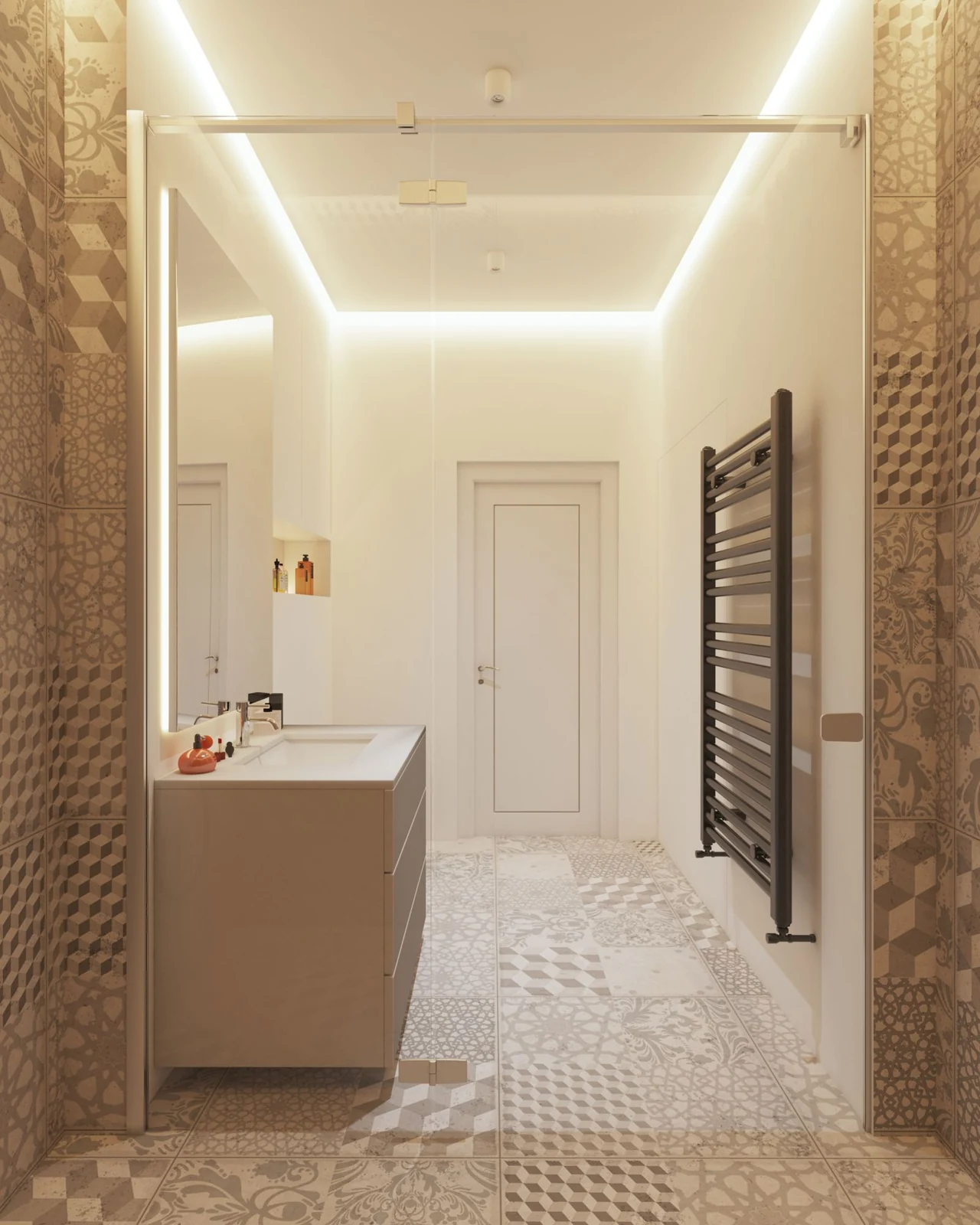
Pair traditional shapes with simpler surrounding surfaces
A shaped mirror, framed cabinet front or traditional tap can stand out against plain walls and a straightforward shower screen. You do not need decorative detail on every surface. Keeping nearby finishes simpler gives the chosen feature room to be seen and can make a compact bathroom feel less crowded. Review the whole wall rather than judging each product in a separate catalogue image.
The opposite approach can work too: a patterned floor or panelled wall can sit beside a plain basin and simple furniture. Check scale carefully, especially where a pattern repeats across a small area. Ask how edges and cuts will be arranged around the bath, doorway and furniture. A material you like as a sample may look different once those interruptions become part of the finished surface.
Use colour and metal finishes to bring the choices together
Look at samples of the walls, floor, furniture and fittings together in the room. Daylight and artificial lighting can change how warm or cool a colour appears. A small set of related colours is often easier to review than many competing shades, but there is no requirement to make every surface identical. Useful contrast can help fittings and changes in level remain clear.
Compare metal finishes physically where matching matters. Similar names from different manufacturers do not guarantee the same colour or texture. Include the less obvious items, such as the basin waste, screen fittings and furniture handles. If you prefer a deliberate mix, decide where each finish belongs before ordering. Keep the complete list so a substituted item can be checked against the rest of the room rather than accepted as roughly similar.
Keep storage, lighting and care in the plan
Traditional-looking furniture can still offer useful modern storage, but inspect the inside arrangement and space taken by plumbing. A deep cupboard may not be as convenient as an accessible drawer for the things you use daily. Plan towels, toiletries and cleaning supplies separately, keeping items appropriately stored. Avoid relying on decorative baskets that end up occupying the floor space needed to move around the room.
Lighting should help with washing, shaving and finding items as well as contributing to the room's appearance. Discuss suitable fittings and positions with a qualified electrician. Read cleaning instructions for the selected surfaces and metal finishes before buying them. A heavily textured tile, decorative edge or special coating may need a different routine from the plain surface beside it, so choose a combination you can maintain comfortably.
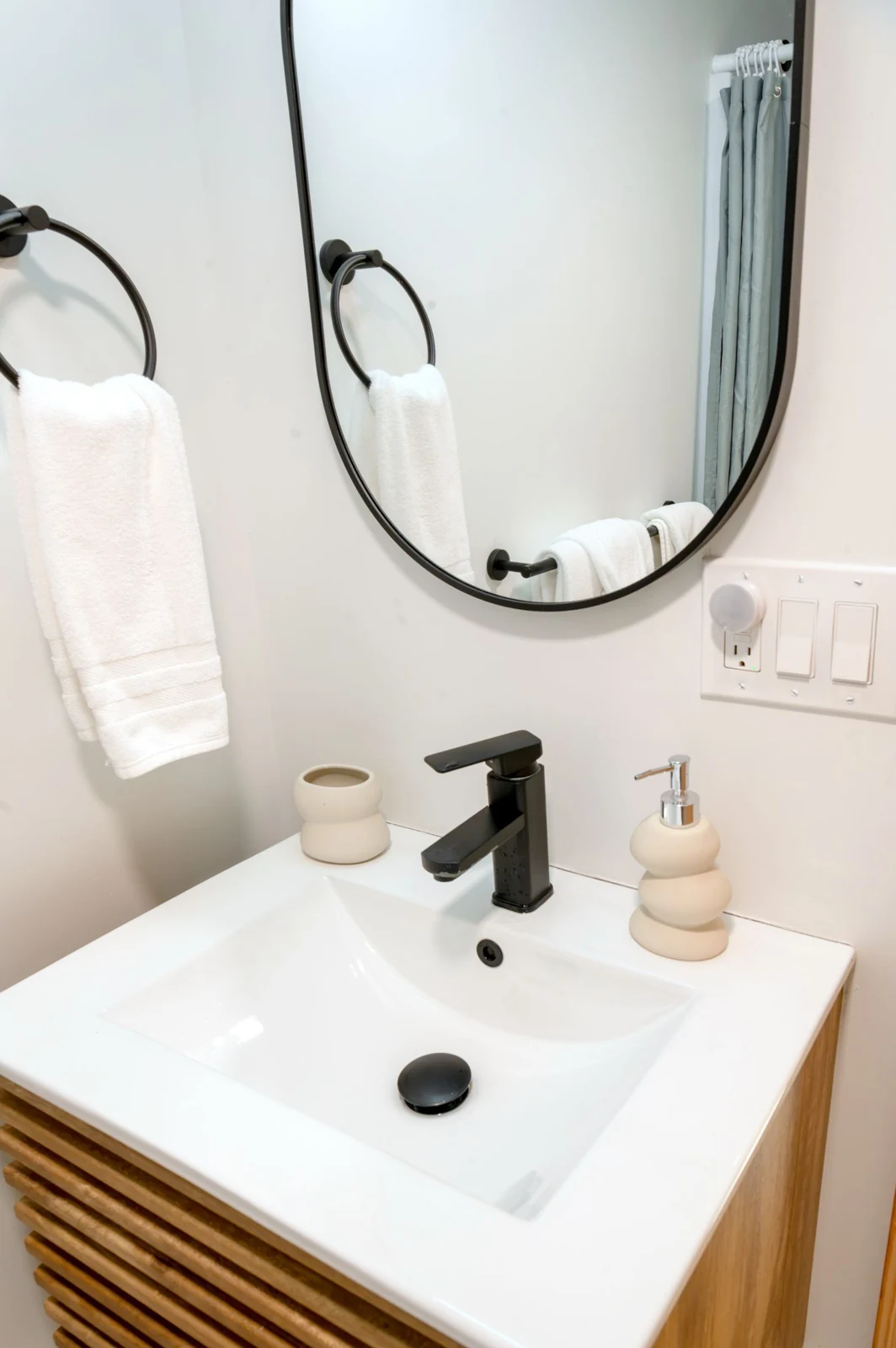
Review the complete proposal before ordering
Lay out the room drawing, product list and samples together. Check that the intended feature remains the focus and that the surrounding choices support the practical layout. If an existing feature is being retained, agree how it will be protected and what repairs are included. In a listed property, check relevant consent requirements with the local planning authority before changes that could affect its character.
Compare the complete fitted work, including preparation, plumbing, electrical work and finishing, rather than the decorative products alone. Keep any later changes in writing and review their effect on both use and appearance. A successful mix does not need to follow a strict period label. It should give you a bathroom whose details you enjoy, whose fittings work together and whose storage, cleaning and daily layout remain straightforward.
To see the work this involves, read about our classic bathroom styles in hamilton. You can also read modern bathrooms for traditional homes and choosing tap and shower finishes.